Showing posts with label paradox. Show all posts

Friday, January 31, 2014

Philosophical Friday


Are You Really You?

Although it may seem nonsensical to even consider, have you ever really wondered whether or not you are the same YOU from when you were born?

“Well, of course I’m me! I have the same eyes, same hair, same body... sure I’ve grown, but...”

NOPE. I’m going to spoil it for you right here. You AREN’T the same you from when you were born, you’re literally a physiologically different person. No, I’m not talking about the kind of “different person” you become after a weekend Bible retreat that your mom made you sign up for, I’m talking biologically different. You essentially get an entirely new body not just once, but several times throughout your lifetime.


The human body is pretty rad. Hair constantly falls out and grows back. Every 35 days the entire surface of your skin replaces itself, every 7 years the entire human skeleton regenerates, our cells chronically grow, die, copy, regenerate, and so forth. So where does this leave us? What implications does this have on our existential crisis of figuring out WHO WE REALLY ARE? Think about it. Your entire SELF, your whole body, every single cell and molecule of it as you sit here and read this mediocre article is COMPLETELY different than it was as short as a few years ago. How can you still be you if none of you is the same stuff that made you before?

We’re not the first to ponder this stimulating question about life. This little conundrum that we’ve begun to reflect upon is described in a thought experiment called “Theseus’s Paradox.” The paradox basically goes as follows: you’re sailing across the ocean blue like a happy little Captain Ahab, and every once in a while, a piece of your ship falls off into the ocean. Naturally, you fix the ship by replacing whatever fell off. Eventually, you’ve sailed around the sea for so long that you’ve replaced every single little piece of the ship with another piece. One day you look upon your grand junkyard-esque ship, and wonder: “Is this really the same boat that I started with?” Well… is it? There are countless ways to look at it. Dead philosophers have given a bunch of really boring names to what they consider to be their own ‘clever’ answers, but every postulation boils down to one determining factor — what one means by “the same.”


The Ship of Theseus

So unfortunately for ‘Mr. Romantic Idealist,’ we must admit to the fact that we are not the same identical cluster of super-organized atoms we were a relatively short time ago. We are, in a literal sense, a “different” person. This knowledge that we indeed are not ourselves, but an agglomeration of what’s around us, is — in a way — sort of beautiful. As we go on in life, we constantly add to the flow of the world, recycling our own atoms with those all around us, and remind ourselves that we are, in fact, the Universe!

Thursday, January 30, 2014

Theoretical Thursday

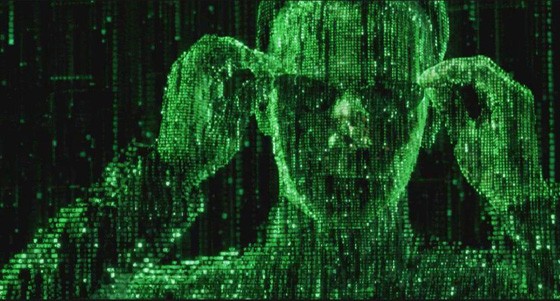
What If We Live in a Computer Simulation?


You've probably heard of the Sims -- a video-game in which the player controls digital people's lives and decides what activities they perform. Now picture this: we are the Sims in our own universe, simulated by much more powerful beings.

The idea might seem crazy, but hear me out. Suppose that a billion years from now, our race and technology still exist and have become unfathomably advanced. Our humble beginnings as humans would be long obscured by time, so we'd want to simulate our history. By Moore's law, computing power doubles every year. We can currently simulate about 1/4 of an atom and all of its properties. In a billion years or less, it's easy to see that we'd eventually have the computational power to replicate the whole universe.


However, a problem arises: Seth Lloyd, a quantum-mechanical engineer at MIT, estimated the total number of events that have ever happened. He found that to simulate this number of events would require more energy than we have in our entire universe! This set our theory aside for a while, but not for long. Just as iTunes allows you to make songs smaller by changing them to a lower-quality  format, future programmers of the simulation we're living in could have "dumbed it down" to make it possible. When we decide to observe distant stars, the simulation would add them in, taking them away again when we stop. We shouldn't be able to tell that what we're living in is fake. Now you may ask, how would we ever find out anyways?

Just like Windows, or Mac, or your Internet browser, this simulation would need updates -- and updates mean glitches. Constants like the speed of light -- things we can detect -- may suddenly change. Another possible observation would be the distribution of super high-energy cosmic waves throughout the universe. A simulated world would be built on a grid-like system much like pixels on a TV. Because of this grid, high energy waves would be uniformly distributed, unlike in a perfectly-smooth real universe that would have an uneven distribution.

"I Hope They Didn't Notice..."


The simulation theory would explain a lot of things going on, such as the Fermi paradox. In our infinite universe, we should have made contact with aliens, or at least discovered some, but we still have not. Perhaps it's because we're programmed in as the only life forms. Also, those that programmed our simulation would probably be living in a simulation of their own. We'll eventually go on to create a simulation of our past in our distant future, and this pattern would continue to the simulation that we create.


"Hello.....? Aliens? You There?"

Many scientists actually think that it's more likely we're living in a simulated universe than a real one because of these explanations. Even if we are, there's really nothing to worry about because it's programmed to seem completely real. Our programmers wouldn't interfere with us: they'd let it play out because they're interested in their own history, not playing games with fake people. Whether we're in a simulation or not wouldn't have any affect on us or our lives. It's still an interesting idea to ponder. What do you think?